
Your website does not have a design problem. It has a trust problem.
A practical guide for company founders and marketing teams on how website clarity, testimonials, service descriptions, and calls to action help visitors trust a business before they get in touch.
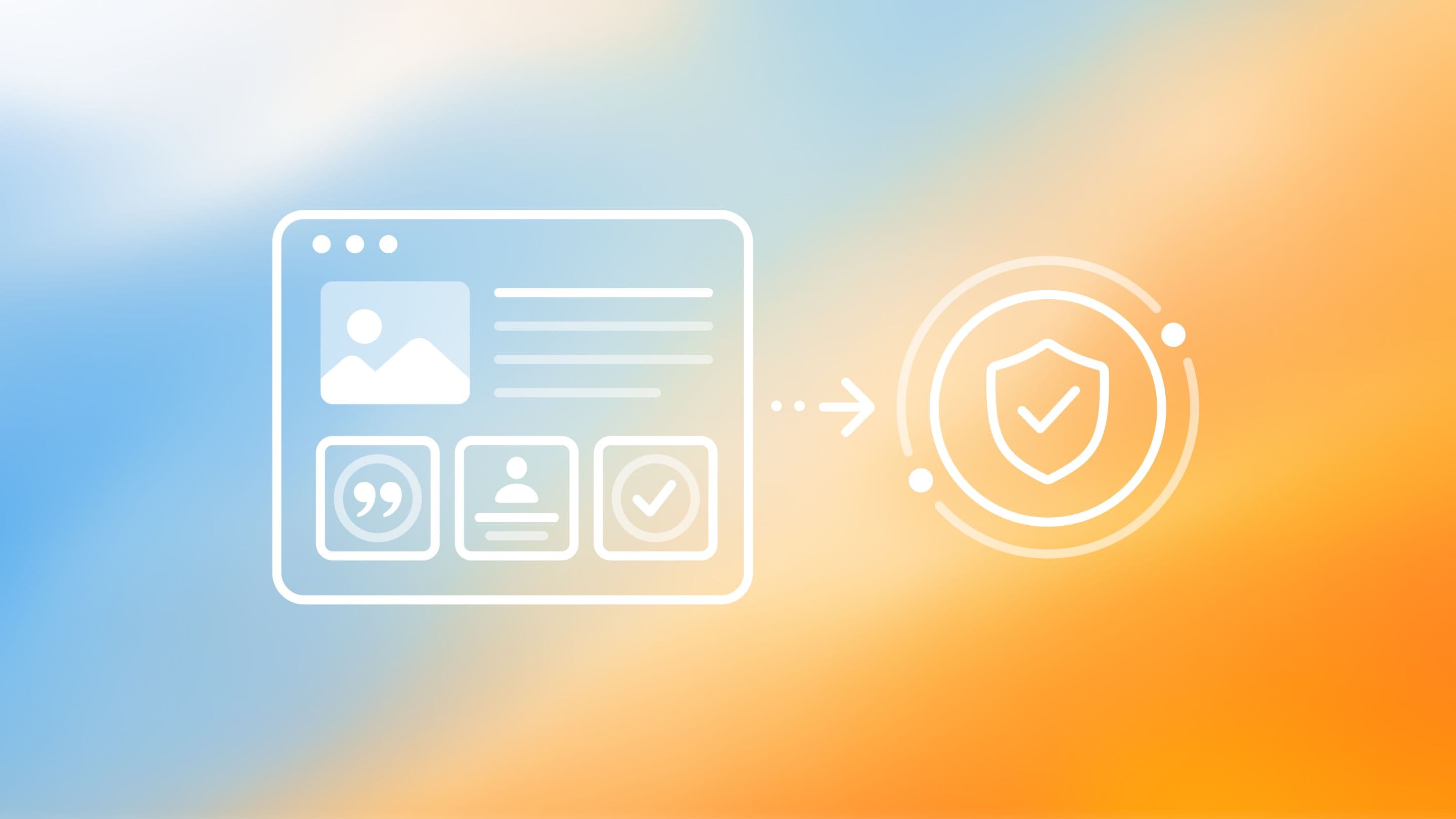
The best websites do more than look professional. They help the buyer feel that the company is clear, trustworthy, and safe to take the next step with.
Many companies treat their website as a visual project.
Does it look modern enough? Are the colors right? Does the first screen create a premium feel? Are the animations subtle? Does the site look better than the competition?
All of that matters.
But it is not the main question.
The most important question is this:
When someone opens your website for the first time, do they understand why they can trust you?
Not just what you do. Not just how polished the brand looks. But why you are the safe choice.
A website does not just sell a service. It sells peace of mind. The feeling that the company understands the problem, knows how to lead the process, and can carry the work through to a strong result.
That trust begins before the first call.
Good design opens the door. Clarity keeps people inside.
A professional website sends the first signal.
It says: this company pays attention to detail.
But after a few seconds, the visitor starts checking much more practical things:
- Is this company right for my situation?
- Do they understand the problem I am bringing to them?
- What exactly is included in the service?
- Have they worked with similar companies?
- What happens if I click the button?
- Does this decision feel safe?
If the website does not answer these questions, the visitor does not always think, “Bad design.”
They simply leave.
Quietly. Without a complaint. Without filling out a form. Without giving your team the chance to explain what the website should have made clear on its own.
That is why even a beautiful website can lose strong leads.
Trust begins while the buyer is still silent.
B2B decisions rarely begin with a sales call. They begin with a quiet evaluation.
Someone lands on your website through a recommendation, a Google search, a LinkedIn post, an event, or a brief conversation with a colleague. They are not ready to talk yet. They are looking for signals.
At that moment, the website has a quiet but important job to do.
It needs to show that the company is real, focused, experienced, and relevant. Not through loud claims. Through structure. Through proof. Through language that sounds like a company that knows what it is doing.
Google says something similar in its helpful content guidelines: good content should be created for people, demonstrate expertise, and help the reader understand enough to move forward. Google also emphasizes that trust is the most important part of E-E-A-T, while experience, expertise, and authority reinforce it.
This is not just an SEO principle.
It is a business principle.
People trust what helps them understand.
The first screen should remove confusion.
The first screen does not need to say everything.
It needs to answer four questions quickly:
- What do you do?
- Who do you help?
- What outcome do you create?
- What is the next safe step?
Many websites feature a sentence that sounds elegant but explains very little:
We create digital experiences for the brands of the future.
It may sound good. Maybe even expensive. But the visitor still does not know whether you build websites, brand systems, apps, campaigns, content platforms, or all of the above.
A clearer version:
We build brand and website systems for B2B companies that need to look credible, communicate their offer clearly, and grow in more competitive markets.
It is less mysterious.
That is exactly why it works better.
Clarity is not a lack of imagination. It is respect for the person trying to understand you.
A service page is not a brochure.
A service page is where doubts should be answered.
Someone who opens a service page is already closer to making a decision. They do not need decorative copy. They need to understand whether this offer fits their situation.
A strong service page answers questions like:
- Who is this service for?
- What problem does it solve?
- What is included?
- What does the client need to prepare?
- What is the typical scope of a project like this?
- What does a good outcome look like?
- What proof shows that you know how to do it?
- What happens next?
If those answers are missing, the buyer has to guess.
Guessing takes effort.
And if a competitor explains the same thing more clearly, the safer choice often wins.
Proof should sit next to the claim.
Often, the trust problem is not that proof is missing. The problem is where it appears.
The website says:
We help companies grow.
But there is no example beside it.
It says:
We create strategic design.
But it does not show how that strategy changed the website, the messaging, the workflow, or the buyer’s decision.
It says:
We have experience with complex projects.
But the proof is hidden away on a separate case study page that the visitor may never open.
Proof should appear where the doubt arises.
If you say you help simplify complex services, show a small before-and-after example. If you say your websites support sales, show how the user journey was improved. If you say you work with premium companies, show the quality standards, project types, decision-making process, or client context.
Trust is not one large case study block at the bottom of the page.
It is a system of small, precisely placed signals.
The CTA should be a bridge, not pressure.
Many websites ask people to act as if they are giving an order.
Book now. Get started. Request a quote. Contact us.
These button labels are not wrong. But they often appear too early and without enough context.
If someone is not yet sure whether the service fits them, a strong button can feel like pressure.
A better CTA helps them take the next safe step:
- Book an initial consultation
- Get a website clarity audit
- View the project process
- See whether this solution fits your situation
- Start with a strategy call
A CTA is not just a conversion element.
It is a trust element.
It says: this is the next step, and you can take it calmly.
Example: a professional website that still feels risky
Imagine a B2B company offering a technical service to clients in construction, manufacturing, or infrastructure.
The website looks good.
Dark background. Strong photography. Big headline. Smooth scrolling. A serious, premium tone.
But the service page contains only three short paragraphs.
It is not clear who the service is best suited for. The process is not explained. There are no examples. No answers about timelines. No indication of what kinds of companies the team usually works with. The main button simply says: “Contact us.”
From inside the company, this website may seem professional.
From the buyer’s side, it still feels risky.
They have to do the work themselves to understand the basics. They have to call just to ask simple questions. They have to compare you with another company that explains its offer more clearly.
The website that looks best does not always win.
The one that builds trust fastest does.
The choice: clean design or enough clarity
This is the real tension.
Too much information makes a website feel heavy. The page becomes long, dense, and hard to scan. Everything starts to look equally important.
Too little information creates a different problem. The website looks clean, but it does not answer the questions that actually drive the decision.
Premium does not mean staying quiet about what matters.
Good design chooses what to show, where to show it, and how calmly to present it. It does not throw out necessary information just to protect the layout. It makes the necessary information easier to absorb.
Cleanliness is not the goal.
Clarity is.
A common mistake we see
A company commissions a new visual design but keeps the old way of thinking.
The same vague copy. The same claims without proof. The same service names that only the team understands. The same contact form with no explanation of what happens after submission.
The website looks newer.
But it does not work much better.
It is a well-furnished room where no one knows where to sit.
Before you change the visual layer, examine the trust structure.
Where does the visitor start to hesitate? Where does a claim need proof? Where does the service page force the buyer to guess? Where does the CTA appear too abruptly?
These questions often tell you more than another moodboard.
What to do this week
Open your website as if you were seeing this company for the first time.
Not as the founder. Not as the designer. Not as the team member who knows all the context.
Read it like a cautious buyer.
Check:
- Is it clear within the first five seconds what the company does?
- Is it clear who the company helps?
- Do the service pages answer the doubts that naturally come up for a buyer?
- Does every major claim have proof beside it?
- Does the visitor see people, process, experience, or concrete examples?
- Does the CTA explain what happens after the click?
- Is the page still clear and calm on mobile?
- Does the copy sound like a real company or like generic industry language?
If several answers are weak, you may not need to start with a full rebuild.
Start with a trust audit.
Find the places where the visitor has to guess. Put proof next to claims. Rewrite service pages so they help people make a decision. Make the next step calm, specific, and safe.
A more beautiful website can help.
A clearer website helps faster.
Services
Team

Patriks Gulbis

Sharpen your clarity thinking with
real examplesSharpen your clarity thinking with
real examples
3 industry examples from design, UX, and psychology twice a month – see it, experience it, understand it.